The One Gauge Every QA Team Should Keep Handy
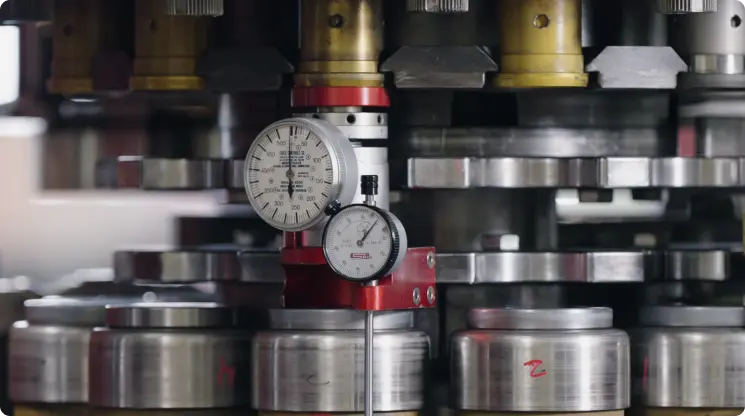
When you’re producing thousands of cans per hour, precision isn’t optional. A small variation in lifter spring pressure can lead to uneven seams, leaks, or an out-of-spec product. That’s why many QA teams rely on a spring pressure gauge for can seamers, an important packaging measurement tool that verifies the force behind every seam your line produces.
By measuring the pressure applied by each lifter, the gauge ensures every station runs within spec. That consistency protects seam integrity, supports audit readiness, and ultimately keeps production moving without costly rework or product loss.
What a Spring Pressure Gauge Measures and Why It Matters
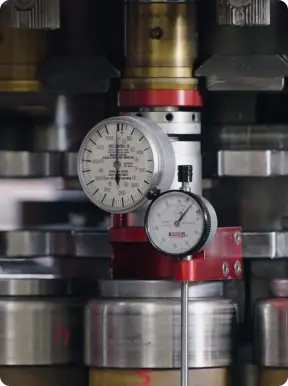 Every can seamer relies on spring-loaded lifters to push cans upward against the chuck during the seaming process. If the spring force is too low, seams can loosen or wrinkle. Too high, and you risk distorted cans or over-tight seams.
A spring pressure gauge directly measures the lifter spring load, showing the exact pounds of force applied at each station. These readings give QA teams hard data to confirm that mechanical settings match the manufacturer’s specifications and that every seam starts from a controlled, repeatable baseline.
Accurate spring pressure also stabilizes downstream processes. When each lifter performs uniformly, it reduces the mechanical variation that leads to inconsistent seams, machine vibration, and downtime.
When to Use a Spring Pressure Gauge
A spring pressure gauge plays a vital role throughout the life of a seamer. From initial setup to ongoing maintenance and quality verification, it confirms that each station applies consistent lifter force.
Using a can seamer QA gauge to check the lifter every few weeks can prevent the slow mechanical drift that leads to major seam problems later. It is especially important to confirm accurate spring pressure during these critical times:
- During setup or rebuilds
- During routine QA checks
- After part replacements
- Before internal or customer audits
How to Read and Interpret Results
A spring pressure gauge simulates a can during the seaming process, allowing you to measure the upward force applied by each lifter. The procedure is straightforward and takes only a few minutes per station:
- Insert the gauge in place of a can
- Raise the lifter until the seamer reaches its full stroke
- Read the pressure indicated on the dial or digital display
Each lifter should register within the same pressure range, typically specified by the machine’s OEM or established during validation. Differences between stations signal spring fatigue, uneven adjustment, or contamination under the lifter pad.
QA teams record these readings in a log sheet to track trends over time. If one lifter begins to show reduced pressure, it’s a clear sign it’s time to schedule maintenance before a defect occurs.
Maintenance and Calibration Tips for QA Gauges
Like any measurement tool, a spring pressure gauge is only as reliable as its calibration. To keep results accurate:
-
Calibrate regularly. Include the gauge in your plant’s QA calibration schedule, ideally every six months or according to manufacturer guidelines.
-
Handle carefully. Avoid dropping or overloading the gauge beyond its rated capacity.
-
Keep it clean and dry. Store the tool in its protective case after each use to prevent corrosion or residue buildup.
-
Verify zero before each check. A quick glance ensures the gauge hasn’t drifted since its last calibration.
Consistent maintenance gives QA teams confidence that every reading they record is valid and traceable, an essential requirement for audit compliance.
How Spring Pressure Data Supports Audits and Continuous Improvement
Documented spring pressure readings show auditors that your QA process includes both dimensional and mechanical verification. They also give production teams a clear mechanical baseline that directly ties to seam-quality results.
When QA logs show stable lifter pressures and matching seam measurements, it reinforces that your control plan is working. If readings drift, you have actionable data to pinpoint whether the issues stem from spring wear, operator error, or equipment misalignment. Over time, those insights help continuous improvement teams fine-tune maintenance intervals and reduce unplanned downtime.
Ready to validate your line’s QA standards?
Schedule a plant audit with RSS MACLIN’s experts.
Why QA Managers Trust RSS MACLIN’s Spring Pressure Gauge Kit
While several manufacturers offer spring pressure gauges, RSS MACLIN’s version is purpose-built for beverage can seamers. The Spring Pressure Gauge Kit includes everything QA teams need to measure lifter force accurately across multiple seamer types. It comes with adapters, a protective case, and calibration support.
The Spring Pressure Gauge Kit is designed to make repeatable testing simple, even in high-speed environments, helping technicians get precise readings without disrupting production. Many QA teams keep a MACLIN gauge kit on hand for every line, pairing it with training or audit services to ensure complete mechanical verification.
It’s a simple investment that pays off in fewer defects, smoother audits, and greater confidence in every production run. Request a quote today!