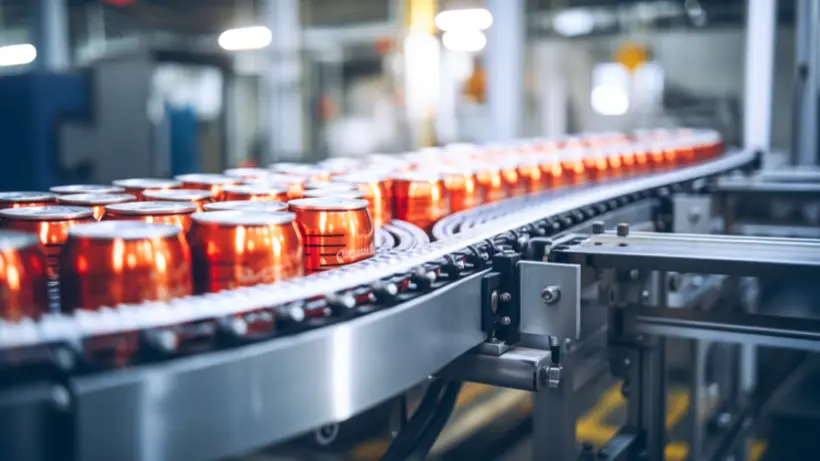
Inside a Packer Rebuild for Food, Beverage, and CPG Lines
When your packaging line depends on steady, high-speed output, even small issues can ripple through production. Worn components, slipping belts, or misaligned sensors can cause jams, missed cases, or costly downtime. Eventually, every packer reaches a point where maintenance alone isn’t enough.
This is a good time to consider a beverage packer rebuild to restore your equipment’s speed, accuracy, and reliability. Let’s look at why you might choose a rebuild over a replacement and how RSS MACLIN’s process works.
When to Rebuild vs Replace
Deciding between a rebuild and a replacement often comes down to performance, cost, and schedule.
If your packer is structurally sound but losing speed or consistency, a rebuild can often restore 85–95% of original throughput. It also helps avoid the long lead times associated with sourcing and commissioning a new machine.
Consider a rebuild if:
- The frame, drives, and main assemblies are intact.
- Downtime is increasing or performance has dropped by more than 10–20%.
- Replacement parts are available, but frequent fixes no longer hold calibration.
- You want to upgrade controls or sensors without a full redesign.
- Because you received an RSS MACLIN packer audit and it’s time!
A rebuild isn’t the right move in every situation. If the frame is cracked or warped, if critical drive components are beyond repair, or if the machine design can’t accommodate today’s production requirements, replacement may be the smarter long-term investment (RSS MACLIN can help there too!)
Rule of thumb: If the packer’s foundation is solid and downtime costs exceed replacement savings, rebuild.
The Beverage Packer Rebuild Process
Every RSS MACLIN rebuild follows a structured, documented process to ensure precision, repeatability, and performance validation. Let’s take a look at the packer rebuild checklist.
Step 1: Audit/Inspection
The rebuild begins with a comprehensive inspection and documentation phase. Technicians evaluate each subsystem to understand how wear, fatigue, or calibration drift affects line performance.
The inspection checklist typically includes:
- Frame and structure: Check for cracks, corrosion, or frame distortion.
- Mechanical assemblies: Inspect shafts, couplings, sprockets, and drives for wear or misalignment.
- Pneumatics: Evaluate actuators, air valves and filters (like Venturi systems), and seals for leaks or reduced stroke pressure.
- Electrical systems: Test PLC inputs and outputs, verify limit switches, and check safety interlocks.
- Conveyance and guides: Confirm infeed and outfeed alignment, spacing, and timing.
- Motors: Electrical (Servo) or mechanical
During this phase, technicians also record baseline performance metrics such as cycle time, indexing accuracy, and throughput. Those benchmarks guide the rebuild process and help validate the final result.
Step 2: Teardown, Cleaning, and Component Replacement
Once the inspection is complete, RSS MACLIN technicians carefully tear down every major assembly, cleaning and restoring reusable components while replacing parts that show wear, fatigue, or corrosion.
Commonly Replaced Components
- Bearings, bushings, and rollers
- Belts, chains, and sprockets
- Drive shafts and couplings
- Actuator seals and air fittings
- Electrical connectors and photoeyes
- Guards, fasteners, and safety covers
Upgrade Options
When appropriate, rebuilds also include modernization options that improve efficiency and control:
- PLC or HMI upgrades
- Servo drive conversions for precise timing
- Energy-efficient motor retrofits
- Enhanced sensors and diagnostics
- Custom, operator-friendly retrofits
Each part is installed, aligned, and torqued to OEM specifications before reassembly begins.
Step 3: Recalibration
Once the machine is reassembled, calibration and setup begins. This stage restores the packer’s speed, precision, and synchronization with the rest of the line.
Calibration steps typically include:
- Timing alignment: Ensure infeed, pick/place, and case-indexing sequences operate in perfect rhythm.
- Pressure and torque settings: Adjust pneumatic and mechanical forces to prevent product damage or jam risk.
- Sensor tuning: Calibrate sensitivity and logic thresholds for consistent detection and positioning.
- Control validation: Verify PLC logic, speed control, recipe verification and safety circuits.
- Safety checks: Confirm that all interlocks and e-stops function correctly.
Technicians use precision measurement tools and OEM reference data to validate adjustments. Each station must meet defined tolerances before the rebuild moves forward.
Step 4: Validation and Testing
Every RSS MACLIN rebuild ends with full performance validation to ensure the packer operates like new.
Validation includes:
- Ramp Up production testing: Run test cases or dummies through at rated speed to verify throughput and accuracy.
- Cycle rate confirmation: Measure and compare against pre-rebuild benchmarks.
- Electrical validation: Confirm PLC response times, I/O mapping, and safety system operation.
Every rebuild leaves our floor with data, not assumptions.
Why Choose RSS MACLIN
Every RSS MACLIN rebuild reflects the same precision, expertise, and attention to detail that define our new equipment builds.
- In-house expertise: Every rebuild is performed by our trained technicians, never outsourced.
- OEM-level quality: Components are rebuilt or replaced to exact specifications for long-term reliability.
- Documented process: Each rebuild follows standardized inspection, calibration, and validation steps.
- Faster turnaround: Completed in weeks, not months, to minimize downtime.
- Trusted by industry leaders: Beverage producers across North America rely on RSS MACLIN for critical packaging systems.
Ready to restore your packer’s performance?
Request a Rebuild Quote or Explore Packer Models
Related Articles
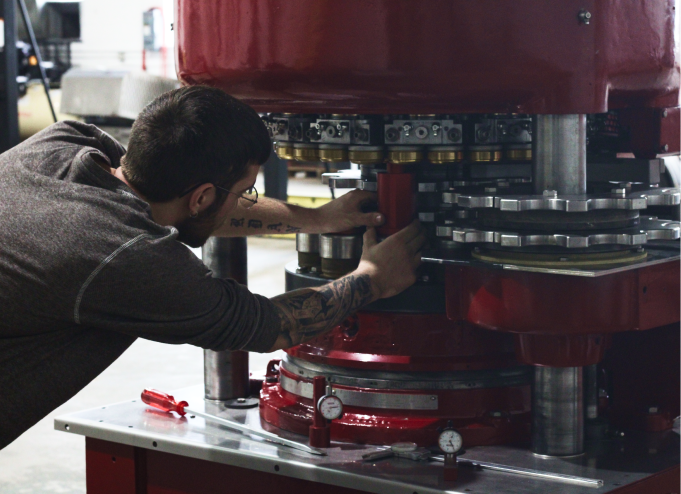
Beverage Packaging & Production Line: The Heart of the Facility
When your packaging line depends on steady, high-speed output, even small issues can rippl…
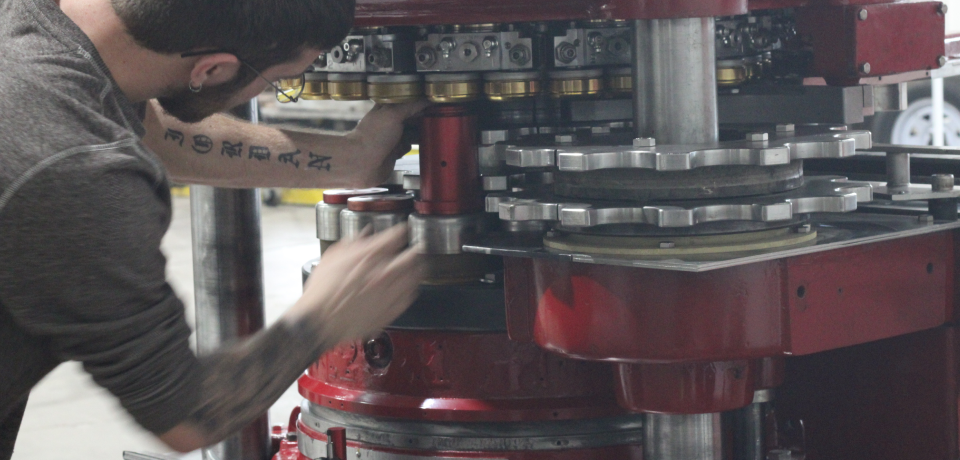
Monthly Guide for Can-Seamer Maintenance
When your packaging line depends on steady, high-speed output, even small issues can rippl…