Choosing the Right Packaging Machine: Speed, Space & SKU Flexibility
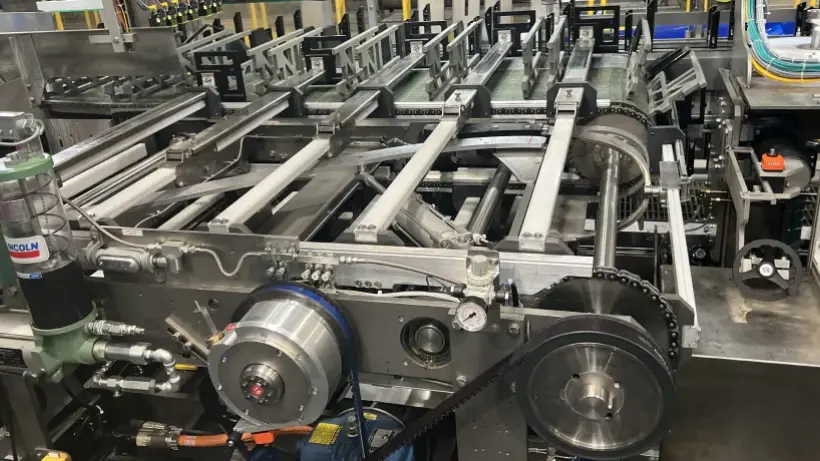
When producers evaluate new equipment, packers often don’t get the attention they deserve. Yet these machines, the link between filled cans and the palletizer, can dictate the efficiency, uptime, and adaptability of your entire line.
A packer must do more than move product; it must keep pace with high-speed filling, adapt to changing SKUs, and fit within the space constraints of modern plants. Whether your team is designing a new line or upgrading an existing one, understanding how to choose the right packer can prevent costly downtime and future-proof your operation.
Understanding Packer Performance in Operations
In a production line, the packer is the critical point where product flow, case design, and throughput all converge. Positioned between the seamer and palletizer, the packer determines how efficiently finished cans move from production to distribution.
The way a packer handles product collation, grouping, and loading can dictate:
-
Whether the line maintains its designed throughput rate or creates bottlenecks
-
How quickly operators can complete changeovers
-
How much floor space is needed to achieve target speed
-
How easily the system adapts to new SKUs or package formats
At RSS MACLIN, our service and parts support for packer equipment is built around the performance variables that matter most to your operation. Rather than looking only at case count per minute, we focus on how the packer integrates with the entire line, because even a fast machine that isn’t aligned with upstream flow or changeover timing won’t deliver true capacity gains.
Comparing Packer Types
Choosing cartoning/case-packing machinery begins with understanding the four main types used in operations:
| Type | How It Works | Best For | Advantages |
|---|---|---|---|
| Drop Packer |
Groups cans above a case and lowers them into place. | Standard can sizes, high-volume runs. | Reliable, compact footprint, proven design. |
| Side-Load Packer |
Pushes groups of cans horizontally into a tray or case. | Fragile or heavier containers. | Gentle handling, easy access for operators. |
| Wraparound Packer |
Wraps a flat blank around cans, then glues or folds it closed. | Shelf-ready packaging or space-limited lines. | Minimal footprint, efficient material use. |
| Pick and Place Packer |
Uses robotic arms to pick and place cans. | Multiple SKUs, frequent changeovers. | Maximum flexibility, reduced changeover time. |
| Tray Packer |
Collates cans and places them into preformed trays, often without a top case. | Food/beverage/CPG lines using shrink-wrap or tray-only packaging. | Simple design, high-speed capability, easy SKU changes. |
| Multipacker | Groups individual cans into multipacks (for example, 6-packs or 12-packs). | Variety-packed products with multiple SKUs in one carton. | Supports variety packs, enhances shelf presentation, and flexible pack configurations. |
No single design fits every plant. The right choice balances throughput with floor space, operator efficiency, and long-term adaptability.
Speed and Throughput: Syncing With Production Line
A high-speed case packer is only valuable if it syncs perfectly with the rest of the packaging line. If the filler and seamer output 300 cans per minute, but the packer maxes out at 300 cans per minute, this can cause backlogs, jams, and inconsistent case fills.
When evaluating speed:
-
Match packer rate to filler and seamer throughput plus a small performance buffer (please refer to v-curve principle).
-
Consider accumulation zones or surge conveyors to smooth product flow.
-
Evaluate dual-lane or robotic options for lines running 40+ cases per minute.
RSS MACLIN’s engineering team can help customers calculate the ideal packer speed and layout for their unique line rhythm, ensuring seamless handoffs between each machine.
Space and Footprint: Making the Most of Your Floor Plan
Floor space in packaging facilities is limited. A packer must fit into existing layouts while maintaining service access and safety zones.
When comparing footprints:
-
Inline designs align with existing conveyors and are ideal for retrofit projects.
-
Compact or modular packers save space without sacrificing performance.
-
Wraparound packers often have the smallest footprint per case produced.
RSS MACLIN’s custom engineering capabilities allow the packer to fit in the allotted space, not the other way around. Whether your team needs a small-footprint solution or a full rebuild, the design process starts with your plant layout and ends with a fully integrated machine.
Changeover Time and SKU Flexibility
Modern food/beverage/CPG producers rarely run a single can size. Seasonal products, new flavors, and private-label contracts demand fast, repeatable changeovers.
A packer that’s flexible enough to handle multiple SKUs is critical to uptime and profitability. Features to prioritize include:
-
Quick-change tooling for can guides, pushers, and case pockets
-
Recipe-based HMI controls to automate setup adjustments
-
Operator training programs that reinforce correct changeover procedures
RSS MACLIN supports this with on-site operator training and service programs that ensure flexibility doesn’t come at the expense of reliability. Training helps teams perform changeovers confidently, reducing the trial-and-error that costs valuable production time.
Total Cost of Ownership (TCO)
When evaluating a case packer, look beyond purchase price. Long-term cost of ownership includes energy use, spare parts, service accessibility, and the ease of rebuilding or retrofitting as needs evolve.
RSS MACLIN’s focus on rebuildable, service-friendly designs helps customers extend the lifespan of existing equipment. Rather than replacing a machine every few years, many consumer packaged goods producers choose to retrofit older packers with upgraded drives, controls, or ergonomic enhancements, cutting capital costs while improving performance.
Why Choose RSS MACLIN
As food/beverage/CPG manufacturers aim for faster, more flexible lines, RSS MACLIN helps bridge the gap between high-speed automation and hands-on expertise.
-
Engineering to meet line speed, layout, and SKU mix requirements
-
Retrofits and rebuilds that modernize legacy machines without full replacement
-
Operator training programs that keep uptime and changeover performance high
-
Parts and service support that protect your investment long-term
-
End-to-end installation and commissioning, with hands-on operator education that supports reliable startup and long-term performance
It’s not just about choosing a packer. It’s about choosing a partner who understands the entire packaging line, from seamer to palletizer.
Choosing Well
The right food/beverage/CPG packaging machine can increase throughput, reduce downtime, and support SKU flexibility for years to come. By comparing speed, space, and changeover requirements early in the process, engineering managers and operations teams can make informed, future-proof investments.
Contact us to explore packer options that fit your unique production line needs.
Related Articles
RSS MACLIN vs. Other Companies: A Workplace Comparison
When producers evaluate new equipment, packers often don’t get the attention they de…
RSS MACLIN: Service Beyond Payday in Beverage Production
When producers evaluate new equipment, packers often don’t get the attention they de…